


Core exercises like the bridges, crunches, and planks work many major core muscles. These movements build core strength, improve mobility, and boost spinal stability. They also support trunk stability, which helps you move with ease.
You use your core muscles all day. You feel them when you lift bags, push a cart, or tie your shoes. A strong core shapes your balance and posture. It keeps your body steady during everyday activities.
Most people think the core is just the abdominal muscles. But the core is much bigger. It includes deep muscles in your back, sides, and around your pelvis. These core muscles work together to keep your body firm, safe, and stable.
Major Core Muscles You Should Know

Your core includes several powerful muscles in the trunk. Together, they help with bending, rotating, standing, and lifting.
Main Core Muscles:
- Rectus abdominis: the six-pack muscles. They help your body bend forward.
- Internal obliques and external obliques: These control trunk rotation muscles and side-bending muscles.
- Transversus abdominis: Key for pelvic stability during movement.
- Lumbar multifidus: Supports the spine and helps keep your body upright.
- Erector spinae: These spine support muscles help with lifting and trunk extension.
Other Important Core Muscles:
- Pelvic floor muscles
- Diaphragm muscles
- Glutes strength
- Muscles connected to the pelvis, like hamstrings, hip flexors, and hip adductors
Simple Guide to Stronger Abs and Better Stability
Building strong core muscles doesn’t have to feel complicated. When you start with simple, safe, and effective beginner core exercises, you build strength that supports your entire body. A strong core helps you sit, stand, walk, lift, and move with ease. And the good news? You can do most core exercises at home without equipment.
This guide walks you through beginner workout moves, intermediate progressions, and advanced drills you can try later. You’ll also learn how to tighten and properly engage your core, and how each exercise supports everyday functional movement.
Let’s start from the beginning.
How to Tighten and Engage Your Core (The Right Way)
Many people hear “tighten your core” but don’t know what it actually feels like. Here’s a simple way to get it right:
- Inhale slowly.
- Imagine pulling your belly button toward your spine.
- Hold the tension gently for a few seconds.
- Keep breathing normally while holding this stable position.
This mild tension is your core activation. Once you learn this feeling, you can apply it to every move in your core workouts—from simple bridges to advanced full-body core workout routines.
BEGINNER MOVES

If you’re returning to fitness or starting fresh, begin here. These core-strength-for-beginners moves help you build stability without stressing your back. They are also great back-friendly core moves if you struggle with occasional low back pain.
1. Bridge Exercise (Glutes Activation + Core Stability)
The bridges exercise is a simple way to activate your glutes and strengthen the muscles around your hips and core. It also supports spinal stability and helps beginners feel the connection between the glutes and lower abs.
How to do it:
- Lie on your back with your knees bent and feet hip-width apart.
- Keep your hands by your sides.
- Tighten your core and squeeze your glutes.
- Lift your hips until your knees align with your shoulders.
- Hold for 10–30 seconds.
- Repeat 3–5 times.
This move builds strength in your hamstrings, glutes, and lower abs, making it one of the best core exercises for beginners at home.
2. Crunches Exercise (Classic Abdominal Strengthening)
A crunch exercise routine targets your rectus abdominis—the front abdominal muscles. It is a simple movement, but it must be done slowly.
If you experience occasional low back pain, be cautious. If your pain is chronic, choose other low-back-friendly core exercises such as toe taps or the bird dog.
Steps:
- Lie on your back with knees bent and feet flat.
- Cross your arms across your chest.
- Engage your core and relax your neck.
- Lift your upper back slowly.
- Pause for a second.
- Lower back down with control.
- Start with 8–12 reps.
This movement trains your rectus abdominis muscles and prepares you for more challenging core workouts later.
3. Supine Toe Tap (Pilates Toe Taps for Gentle Core Activation)
A favorite in Pilates routines, the supine toe tap (also called pilates toe taps), strengthens your deep abdominal muscles with almost no pressure on your spine.
How to do it:
- Lie on your back.
- Lift your legs to a tabletop (90° bend).
- Tighten your core to keep your back flat.
- Lower your right foot and tap the floor lightly.
- Return and switch sides.
- Start with 8–12 reps per side.
These beginner workout moves help you learn to control, coordinate, and activate your core.
4. Bird Dog Exercise (Balance + Stability Training)
The bird dog exercise targets both your abs and your back muscles. It’s one of the safest core stability training moves for beginners.
Steps:
- Start on all fours.
- Lift your right leg and left arm.
- Keep your spine neutral.
- Hold briefly.
- Switch sides.
- Start with 8–12 reps.
This move improves balance, posture, and stability—key parts of core muscle training and everyday functional movement.
5. Bicycle Crunch (Obliques + Hip Flexors + Rectus Abdominis)
The bicycle crunch activates your obliques, rectus abdominis, and hips. It’s an excellent oblique workout and great for strengthening the sides of your waist.
How to perform it:
- Lie on your back.
- Bend your left knee toward your chest.
- Keep your right leg straight and lifted.
- Lift your right shoulder and rotate toward your left knee.
- Switch legs and switch elbows.
- Repeat 12 alternating reps for three sets.
This movement trains your twisting strength, which supports everyday turning, lifting, and rotation work.
INTERMEDIATE MOVES

Once beginner core exercises feel comfortable, increase the intensity. These intermediate core exercises help improve strength, posture, and control.
1. Plank Exercise (Full Body Core Training)
The plank exercise trains your entire trunk and even engages your arms, shoulders, glutes, and legs.
How to plank:
- Start on all fours.
- Straighten your legs behind you.
- Keep your body in a straight line.
- Engage your core and hold for 10–30 seconds.
- Repeat 3–5 times.
This is a staple of core workouts, and it builds strong, stable abs for beginners.
2. Warrior Crunch (Lower Body + Abs)
The warrior crunch blends squatting with side crunches. It targets your thighs, glutes, and obliques.
Steps:
- Stand with feet wider than shoulder-width.
- Place your hands behind your head.
- Bend your knees until your thighs are parallel to the floor.
- Lower your torso to the right, then left.
- Start with 8–12 reps.
This develops core mobility and full-body engagement.
3. Bird Dog Elbow to Knee (Dynamic Stability Exercise)
This upgrade to the classic bird dog adds movement and improves coordination.
How to do it:
- Start on all fours.
- Extend the right leg and the left arm.
- Bring the elbow and the knee together.
- Extend again.
- Repeat 8–12 reps and switch sides.
This move blends strength, coordination, and balance.
ADVANCED CORE EXERCISES
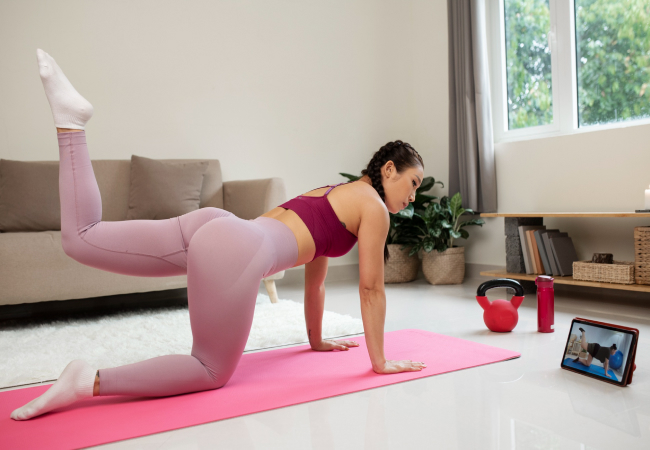
Once you’ve mastered your intermediate routine, you’re ready for a challenge. These advanced core exercises train your abs, hips, back, and shoulders in more complex ways. They build real-life strength that helps you twist, lift, rotate, and balance better during everyday activities.
These moves demand more control, more stability, and more awareness of your body. Make sure you warm up and keep every rep slow and intentional.
1.Mountain Climber Exercise (Speed + Stability + Core Strength)
The mountain climber exercise blends a plank with quick knee drives. It challenges your core, shoulders, hips, and coordination simultaneously. Even though it’s labeled “advanced,” it’s still one of the safest core exercises at home because you can control your pace.
How to do it:
- Begin in a strong plank.
- Tighten your core and keep your back flat.
- Pull your right knee toward your chest.
- Switch legs smoothly.
- Continue alternating for 8–12 reps per side.
This move improves endurance, balance, and speed. It fits perfectly into any full-body core workout routine.
2. Side Plank With Rotation (Obliques + Shoulders + Stability)
The side plank with rotation is a powerful way to train your obliques, shoulders, and deep abdominal muscles. It’s an advanced version of the regular plank and is excellent for oblique-focused workouts.
Steps:
- Lie on your right side.
- Lift your hips to form a straight line.
- Raise your left arm.
- Rotate your torso and sweep your left arm under your body.
- Rotate back to the start.
- Perform 8–12 reps per side.
This exercise develops rotational control—something we use daily when reaching, turning, and lifting.
3. Turkish Get-Up Exercise (The Ultimate Full Body Core Workout)
The Turkish get-up exercise might be the most complete movement in this entire routine. It trains your hips, spine, shoulders, and deep abdominal muscles. It also improves balance, mobility, and strength simultaneously. Even without weight, it builds impressive core stability training.
How to do it:
- Lie flat with legs straight and arms at a 45-degree angle.
- Bend your right knee and plant your foot.
- Raise your right arm toward the ceiling.
- Keep your eyes on your fist.
- Push into your left elbow to sit up.
- Press through your palm to lift your torso.
- Slide your left leg under your body.
- Move into a kneeling position.
- Stand by pushing through your right foot.
- Reverse the entire movement.
- Start with 3–5 reps.
This is one of the best exercises for building spinal stability, hip mobility, and full-body strength, as well as developing proper functional fitness.
Tips for Maximizing Core Workouts
When working on your core workouts, focus on maintaining proper core form. Drawing your navel toward your spine helps activate abdominal muscles effectively. This simple action ensures you engage your core throughout each movement. Correct breathing is equally important. Exhale during exertion to stabilize your core and maintain control.
Adding a variety of core exercises keeps your routine dynamic. Include moves that challenge your balance, coordination, and stability. Rotating exercises ensure you target all core areas. Combining plank, crunch, and bridge benefits provides a full spectrum of core activation. Even at home, core exercises can be practical when performed consistently.
1. Maintain Proper Form for Maximum Results
Consistency matters more than intensity at first. Safe core training starts with small, controlled movements. Avoid rushing reps. Focus on gradual core progression to safely strengthen your muscles. Engaging your core correctly reduces strain on your lower back and enhances core stability. A strong core supports daily functional movements and improves posture.
2. Incorporate Breathing Techniques
Core breathing techniques are crucial for building core strength in beginners. Inhale deeply before initiating a movement. Then, exhale while lifting, twisting, or holding a position. This simple habit enhances core coordination exercises and stabilizes your spine. Breathing properly also improves endurance and ensures each exercise works the intended muscle groups.
3. Include a Variety of Exercises
A dynamic core routine includes exercises like planks, crunches, bridges, and pilates moves like the supine toe tap. Each targets different muscles.
For example:
- Plank exercise strengthens your abs, back, glutes, and shoulders.
- The bicycle crunch focuses on the obliques and the rectus abdominis.
- Bird dog exercises and their variations enhance balance and stability.
- Bridges exercise activates the glutes while improving core strength.
Mixing exercises prevents boredom and ensures balanced core muscle development. Core exercises at home can also incorporate light weights or resistance bands for added challenge.
4. Consistency and Gradual Progression
Building functional core strength requires patience. Stick to a schedule and progress gradually. Include core-stability training and full-body core workout routines at least 3 times a week. Consistency in core training routines improves posture, reduces injury risk, and enhances everyday movements. Safe, well-structured exercises support both strengthening the abs and back and hip mobility.
Conclusion
A strong core is the foundation for overall fitness. Substantial core benefits include better posture, reduced injury risk, and improved athletic performance. Focus on healthy core habits like proper form, consistent practice, and gradual progression. Whether performing core workouts at the gym or core exercises at home, following these tips ensures you get the most out of your core workouts safely and effectively.
FAQs:
1. What is the fastest way to build a core?
Regular exercise, adequate rest, and a nutritious diet support the development of core muscles.
2. Can you tone your core fast?
Toning requires increasing muscle mass while reducing overall body fat. There’s no way to target fat loss in one area (fat loss myths).
3. Which are the best core exercises?
Planks, crunches, and bridges all strengthen core muscles differently. The best choice depends on mobility, fitness level, and goals.




Leave a Reply