


There’s a moment every physician knows. The visit is over. The patient has left the room. And you’re still sitting there — pulling labs, checking old meds, hunting through hospital notes — trying to piece together a story that should have been right in front of you the whole time.
That moment is exactly where so much clinical value gets quietly lost.
For years, we’ve been told that AI in healthcare will “save us time.” And honestly? That promise has only been half-delivered. Ambient AI scribes showed up and did something genuinely useful — they started capturing what happens inside the exam room. But they left a massive gap: everything that happened before the patient walked through the door.
A study from Navina found something that should make every healthcare leader pay attention. When ambient documentation was paired with a patient’s historical data, documentation completeness jumped from 40% to 83%. That’s not a minor improvement. That’s a complete shift in what’s possible.
This is the new conversation in healthcare AI. Not just faster notes. Smarter care.
The Real Gap in AI Medical Scribe Technology

Pavel Danilyuk _ pexels
Ask any physician about their AI medical scribe, and they’ll usually say the same thing — it helps, but it doesn’t solve everything. Ambient scribes listen. They transcribe. They do it well. But the exam room conversation is only one small piece of what a clinician actually needs to make good decisions.
What about the hospitalization from three months ago? The lab that came back borderline six weeks back? The specialist’s note is buried three layers deep in the chart? These things don’t show up in a transcript. They show up — or don’t — in how the physician prepares, responds, and plans.
That’s why AI for clinical documentation has to go deeper than transcription. The real value isn’t in what gets written down after a visit. It’s in what gets understood before, during, and after. This is where a true clinical AI copilot changes the game entirely.
From Faster Notes to Smarter Clinical Decisions
SHVETS_ production _ pexels
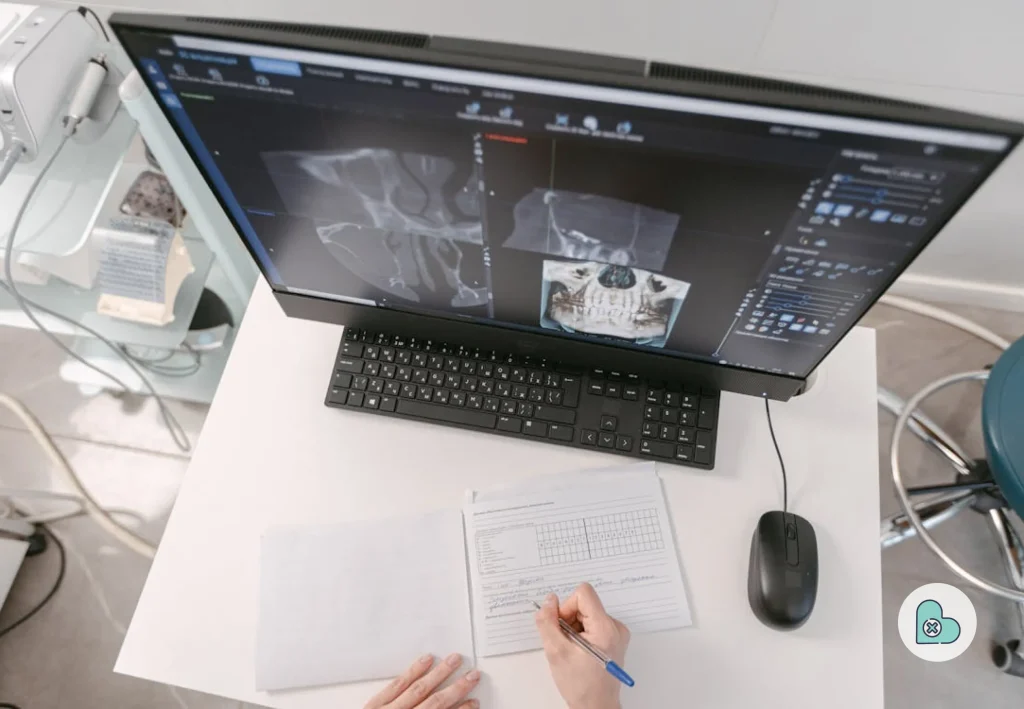
Speed matters. Nobody is arguing otherwise. But in clinical care, AI clinical decision support is the real lever — not just documentation speed. When an AI for physicians surfaces a suspected condition, flags a missing lab, or highlights a care gap at the exact moment it matters, that’s when things shift from efficient to genuinely better.
There’s a meaningful difference between a tool that helps a doctor write faster and a tool that helps a doctor think more clearly. The first reduces time. The second reduces risk. And in AI in value-based care, it’s the second one that actually moves the needle.
What Longitudinal Patient Data Actually Unlocks

Anhelina Vasylyk _ pexels
Think about what it means when a clinical intelligence platform reconciles years of patient history into one clean, clinician-ready view before the visit even starts. Comorbidities surface. Old hospitalizations show up. Claims data fills in the gaps that the EHR missed. Labs ordered elsewhere are pulled in via HIE data.
This is what longitudinal patient data AI actually looks like in practice. It’s not a dashboard. It’s context — the kind that shapes the questions a doctor asks, the diagnoses they consider, and the decisions they make.
Why Ambient Documentation Healthcare Tools Are Only Half the Answer
There’s no question that ambient documentation healthcare tools have moved things forward. They’ve reduced the burden of post-visit note writing. They’ve given physicians back some of the time that used to disappear into keyboards and clicks.
But here’s the truth: ambient alone is a good start. It’s not a complete answer.
When a visit ends, and a clinician still has to reconcile medications manually, chase down prior authorizations, and piece together post-discharge care gaps — that’s not a solved problem. That’s a shifted problem. The work moved from during the visit to after it.
A genuine AI for clinical workflows approach connects the dots across the full care journey. That means:
• Pre-visit prep: surfacing what the clinician needs to know before the patient arrives
• Point-of-care guidance: real-time flags for suspected conditions and care gaps
• Live documentation support: capturing the conversation while it happens
• Post-visit workflows: supporting quality, care management, and risk capture after the encounter
This connected approach is what healthcare workflow automation should look like at its best. Not just one moment. The whole journey.
HCC Coding AI and the Value-Based Care Equation
If you work in a risk-bearing organization, you know that HCC coding AI is not a nice-to-have. It’s a financial reality. Every missed condition, every undocumented diagnosis, every late-captured comorbidity has a direct dollar impact on risk scores and reimbursement.
And yet, most healthcare AI tools don’t address this. They help with notes. They don’t help with risk accuracy.
Turning Clinical Intelligence Into Measurable ROI

pressfoto _ freepik
A healthcare revenue-optimization AI platform purpose-built for value-based care does something fundamentally different. It ties documentation completeness directly to revenue performance. It surfaces risk recapture opportunities in real time. It ensures that the clinical work in the exam room translates into accurate, complete, and defensible documentation.
In risk-bearing models, this is the difference between “we saved some time” and “we improved our financial performance by a measurable margin.” That’s not a soft outcome. That’s the whole point.
AI for EHR Optimization: What It Should Actually Look Like
Many vendors talk about AI for EHR optimization as though it means making the EHR run faster—fewer clicks. Smarter auto-fill. Better templates. Those things have value, no doubt.
But the bigger opportunity is using electronic health records AI to make the information inside the EHR actually usable. Right now, the average physician has access to enormous amounts of data. The problem is that it lives in silos, arrives out of context, and shows up too late to change a decision.
What AI for patient data analysis can do is change the relationship between a clinician and their patient’s data. Instead of hunting for information, the information comes to them. Organized, prioritized, and actionable. That’s what patient data integration AI looks like when it’s working the way it should.
Reducing Physician Burnout With AI That Actually Helps
It’s worth naming this directly: physician burnout is a real crisis. And a big part of it comes from administrative overload — documentation, coding, chart review, prior auth, follow-up. These are hours that eat into clinical time, personal time, and the kind of headspace that good medicine requires.
AI for reducing physician burnout isn’t just about making doctors feel better (though that matters enormously). It’s about keeping experienced clinicians in medicine. It’s about reducing errors caused by fatigue. It’s about building sustainable practices in an era when physician shortages are already a serious concern.
When AI for healthcare efficiency actually works — when it surfaces the right information, handles the documentation burden, and connects clinical intelligence to actionable workflows — it doesn’t just save time. It gives back the cognitive space that good clinical judgment requires.
Healthcare AI Trends 2026: Where the Industry Is Heading
The healthcare AI trends 2026 conversation has moved well past the “should we adopt AI?” stage. The real questions now are about which tools go deep enough, which integrations actually hold up in practice, and which platforms are built for the complexity of modern clinical environments.
The answer isn’t going to be a single point solution that handles transcription, coding, or documentation in isolation. AI-powered healthcare platforms that matter will be the ones that integrate across the care continuum — connecting ambient capture with longitudinal history, real-time insight with post-visit workflows, clinical intelligence with financial performance.
Digital Transformation in Healthcare Starts With the Right Foundation
Digital transformation in healthcare is a phrase that gets used so often that it can start to feel abstract. But at the practice level, it means something very concrete: the ability to take all the data, all the history, all the clinical context that exists about a patient and turn it into a clear, actionable picture at the moment it’s needed most.
That’s not a technology problem anymore. The technology exists. The question is whether organizations are choosing platforms built to deliver that full picture—or settling for tools that capture only part of it.
The Bottom Line
Ambient scribing was a meaningful step. It solved a real problem. But it left the harder problem — the full patient story — largely untouched.
The AI healthcare solutions that will define the next chapter aren’t the ones that record better. They’re the ones who understand better. The ones that bring together ambient capture, longitudinal patient history, real-time clinical intelligence, and connected post-visit workflows into a single, coherent experience for the clinician.
Because when a physician walks into an exam room, they shouldn’t have to choose between caring for their patient and hunting for information. Both should be possible. AI in healthcare has the potential to make that the norm — not the exception.
We’re not there yet. But with the right platforms and the right approach, we’re closer than most people think.





Leave a Reply