

Most people want fast results. They want to look better. They want to feel stronger. They want to lose fat or build muscle as quickly as possible. That drive is powerful. I respect it. But jumping straight into hard workouts often backfires. The reason is simple. Most people do not move well.
When foundational movement patterns are weak, everything built on top suffers. Poor movement leads to slow progress. It also increases injury risk. If you enjoy variety in workouts, you are not alone. Trying new exercises feels exciting. It keeps training fresh. But too much variety creates a problem. Fancy exercises hide weak movement patterns. They reinforce bad habits instead of good ones.
The fastest way to get stronger is also the safest. Learn the six foundational movement patterns first. Practice them often. Load them gradually. Master them fully. This approach builds muscle, protects joints, and improves performance for life. It also forms the backbone of any effective strength training program.
What Are Fundamental Movement Patterns?
In smart strength training fundamentals, experts agree on one thing. Every effective strength training program relies on the same base movements.
These are known as the six foundational movement patterns:
- Squat
- Hinge
- Lunge
- Push
- Pull
- Carry
These patterns are universal. Age does not matter. Fitness level does not matter. The training goal does not matter. Every human benefits from mastering them. These functional movement patterns support a holistic fitness approach. They improve strength, coordination, and resilience together. They also transfer directly to real-life movement.
Why Movement Quality Matters More Than Intensity
Think about how kids move. They squat naturally. They hinge without effort. They fall, stand up, and keep playing. Adults often lose this ability. Years of sitting create stiffness. Poor posture creates compensation. Disuse weakens muscles.
Over time, dysfunctional human movement patterns develop. The body adapts to bad positions. Then every movement becomes less efficient. These patterns form the base of all exercise. If the base is weak, results suffer. Injuries become more likely. By improving movement quality training, everything changes. Stability improves. Strength increases. Mobility expands. Better movement also improves posture and alignment. That makes every workout in a strength training program more effective.
The Six Fundamental Movement Patterns Explained
1. Hinge Movement Pattern
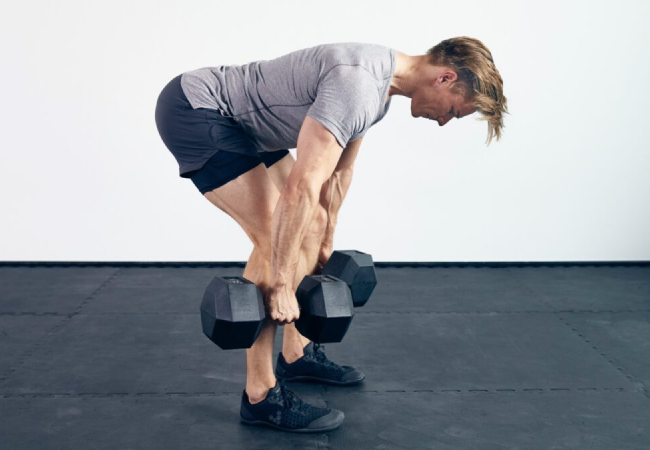
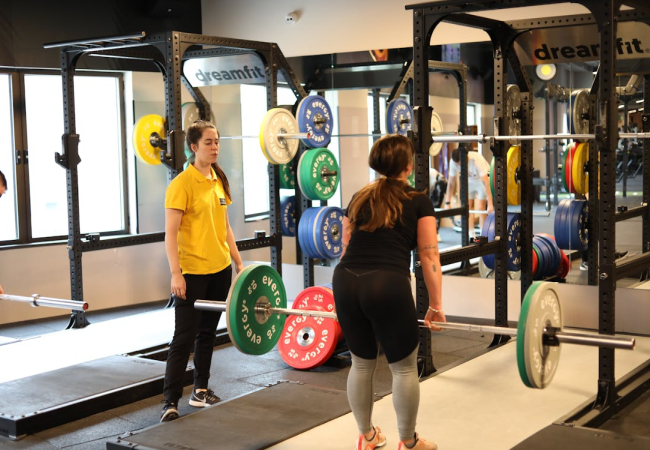
The hinge movement pattern happens at the hips. The knees bend slightly. The spine stays neutral. This pattern loads the posterior chain exercises. Glutes and hamstrings do most of the work. You hinge when lifting objects from the floor. You hinge when picking up a suitcase. You hinge during the first phase of a squat. Strong hinges protect the lower back. They are essential for safe strength training.
Common hinge exercises include:
- Deadlift variations
- Romanian deadlifts
- Trap bar deadlifts
- Kettlebell suitcase deadlifts
- Banded hip hinge exercises
2. Squat Movement Pattern
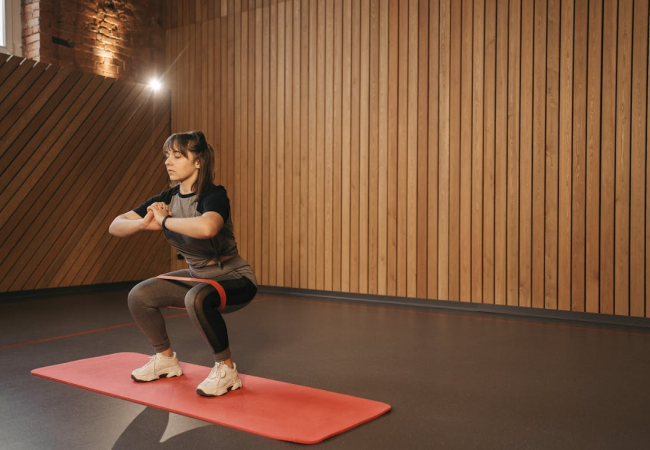
The squat movement pattern bends the hips and knees together. The body lowers under control. Then it returns to standing. You squat every day. Sitting down uses it. Standing up uses it. Getting into a car uses it. Proper squatting improves body control. It also supports knee and hip health. Vigorous squat exercises build full-body strength. They support athletic and daily movement.
Common squat variations include:
- Bodyweight squats
- Goblet squats
- Barbell back squats
- Front squats
- Safety bar squats
- Cossack squats
- Pistol squats
3. Lunge Movement Pattern
The lunge movement pattern is unilateral. One leg works at a time. Balance plays a significant role. Lunges build coordination and stability. They also reveal strength imbalances. You use lunges more than you think. Standing on the floor uses it. Stepping around obstacles uses it. This pattern supports balance and coordination exercises. It also improves joint control.
Popular lunge exercises include:
- Reverse lunges
- Walking lunges
- Lateral lunges
- Curtsy lunges
- Front-foot elevated lunges
4. Push Movement Pattern
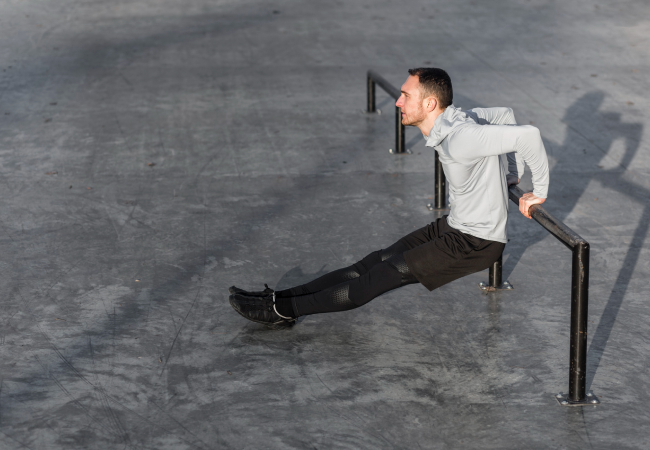
The push movement pattern moves the weight away from the body. It trains the chest, shoulders, and triceps. You push doors open daily. You push yourself off the floor. You push objects overhead. Intense pushing supports upper-body strength. It also balances pulling movements.
Common push exercises gym programs use:
- Push-ups
- Bench press
- Overhead press
- Arnold press
- Incline dumbbell press
- Floor press
5. Pull Movement Pattern
The pull movement pattern brings weight toward the body. It strengthens the back and arms. You pull things constantly. You pull doors closed. You pull objects from shelves. Pulling supports posture and spinal health. It also improves shoulder stability. Strong pulling is essential for injury prevention workouts.
Effective pull exercises gym routines include:
- Seated rows
- Pull-ups
- Chin-ups
- Lat pulldowns
- Bent-over rows
- Face pulls
6. Carry Movement Pattern
The carry movement pattern involves holding the weight while moving. It challenges grip, core, and posture. You carry groceries. You carry bags. You carry suitcases. Loaded carries build real-world strength. They improve core stability training and endurance. Carries also reinforce posture under load.
Popular loaded carry exercises include:
- Suitcase carries
- Farmer’s carries
- Overhead carries
- Kettlebell racked carries
- Sandbag carries
- Trap bar carries
Building Strength the Smart Way

Mastering the six foundational movement patterns creates a strong base. From there, progress accelerates. Muscle builds faster. Strength increases safely. Injuries decrease. This is true for beginners and advanced lifters. It supports beginner strength training and elite performance.
If your goal is long-term results, this matters. Focus on foundational strength training first. Add complexity later. Quality movement always wins.
Programming Your Workouts the Smart Way
Good results come from innovative programming workouts, not random effort. Most people train hard but skip proper structure. That mistake slows progress and raises injury risk. A solid strength training program design focuses on quality first.
It balances effort, recovery, and movement skill. This approach works for beginners and experienced lifters. Your goal is simple. Train consistently. Move well. Progress safely. When workouts follow straightforward workout programming basics, results become predictable and sustainable.
Sets, Reps, and Effort Levels
For most exercises, aim for 3–4 sets per movement. Each set should include 8 to 10 reps in the strength training range. This range supports muscle growth and strength together. Use the perceived exertion scale training to guide effort.
Each set should feel like a 7 or 8 out of 10. You should work hard, but not hit failure. This method supports RPE scale strength training and long-term progress. It also allows consistent progressive overload training without burnout.
These sets and reps for muscle building fit almost any goal. They work well inside a movement-based training program.
Training Frequency and Workout Length
Your weekly schedule matters. It determines how you structure your workouts. If you train 2 or 3 days per week for 30–40 minutes, keep it simple. Avoid isolation exercises altogether. Skip lateral raises and triceps pulldowns.
Instead, focus on compound movement patterns only. This approach builds more muscle in less time.
It supports functional strength training and efficiency. If you train longer than 45 minutes, adjustments make sense. You can add isolation work at the end. But only after the main lifts are done. This balance solves isolation exercises vs compound exercises effectively.
Programming Based on Training Days
When training 2 days per week, use full-body sessions. Each workout should train all major movements. This works well for busy schedules. When training 3 days per week, you have two options.
You can do three full-body workouts. Or use one upper, one lower, and one full-body day. Both options support full-body strength training. They also work well for a beginner strength training program.
When training 4 days per week, structure matters more. Use an upper-lower split workout. Train the upper body twice. Train the lower body twice. This format supports an upper-body lower-body workout split. It allows more volume with better recovery.
Focus on the 6 Foundational Movement Patterns
Every effective strength training program relies on basics. That means training the six foundational movement patterns. These include squat, hinge, push, pull, lunge, and carry. They form the base of all functional movement patterns.
Most of your workout should target these patterns. They support a compound exercise workout structure. They also build real-world strength. Once all patterns are trained, add isolation work if needed. Keep it minimal. Keep it intentional. This approach improves movement quality training and consistency.
Short on Time? Train Smarter
Time constraints should not stop progress. You can still train effectively. Choose 2–3 movement patterns. Set a 10-minute timer. Complete as many quality rounds as possible. These 10-minute workout circuits save time.
They also increase intensity naturally. This method works well for time-efficient workouts. It fits into short workout routines easily. Movement-based circuits also improve conditioning. They support movement pattern circuits and coordination.
Benefits of Refining Foundational Movement Patterns
Improving foundational movement patterns training delivers significant benefits. These benefits extend beyond the gym. Better stability improves control. Better control allows heavier lifts. It also improves sports performance.
Improved mobility and stability training
It enhance daily movement. Jumping feels smoother. Landing feels safer. Carrying groceries feels easier. Performance improves when movement improves. Complex exercises become easier.
Energy transfer becomes more efficient. This is biomechanical efficiency training in action.
Strength Gains and Injury Prevention
Better movement leads to better strength gains. Deeper ranges activate more muscle fibres. That supports strength gains optimization. A deep, controlled squat builds more muscle than a shallow one. Correct form matters more than load. This is true for all lifts. Improved mobility supports range of motion improvement.
Better range equals better muscle activation. This process strengthens joints and muscles. It supports injury prevention workouts naturally. Over time, posture improves. Body awareness increases. This reduces injury risk in daily life.
Long-Term Benefits Beyond the Gym
Refining movement patterns builds resilience. The musculoskeletal system becomes stronger. Stress is distributed more evenly. This improves posture and alignment exercises naturally. It also supports core stability training and balance.
Over time, training feels smoother. Recovery improves. Confidence increases. This is the foundation of long-term fitness programming. It supports sustainable workout routines and independence.
Conclusion
Mastering the six foundational movement patterns is essential. It builds strength. It reduces injuries. It supports lifelong fitness. A well-structured strength training program prioritises movement quality.
It adapts to individual ability. It progresses gradually. This holistic approach delivers consistent results. It supports performance today and health tomorrow. That is actual functional longevity training.





Leave a Reply