

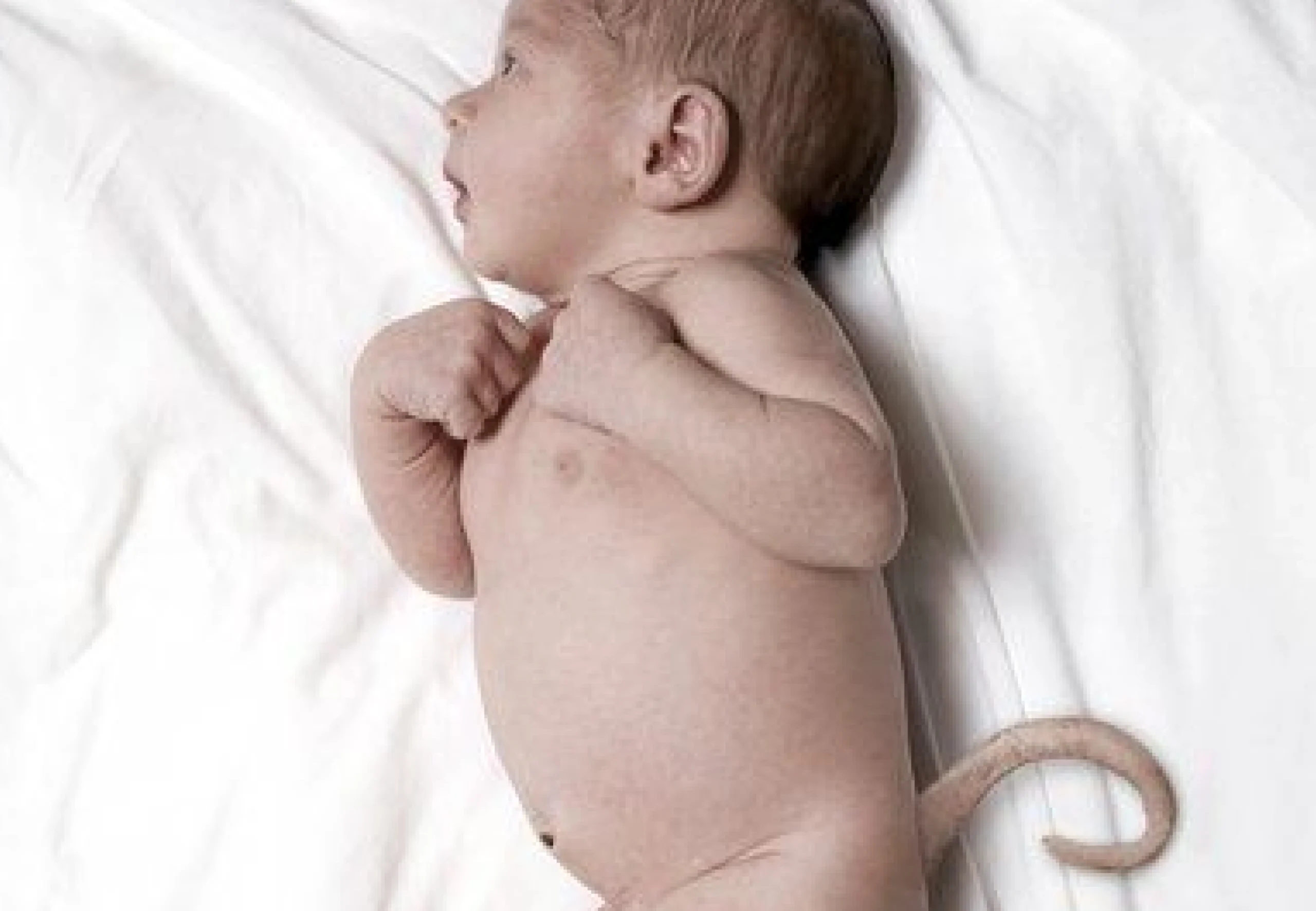
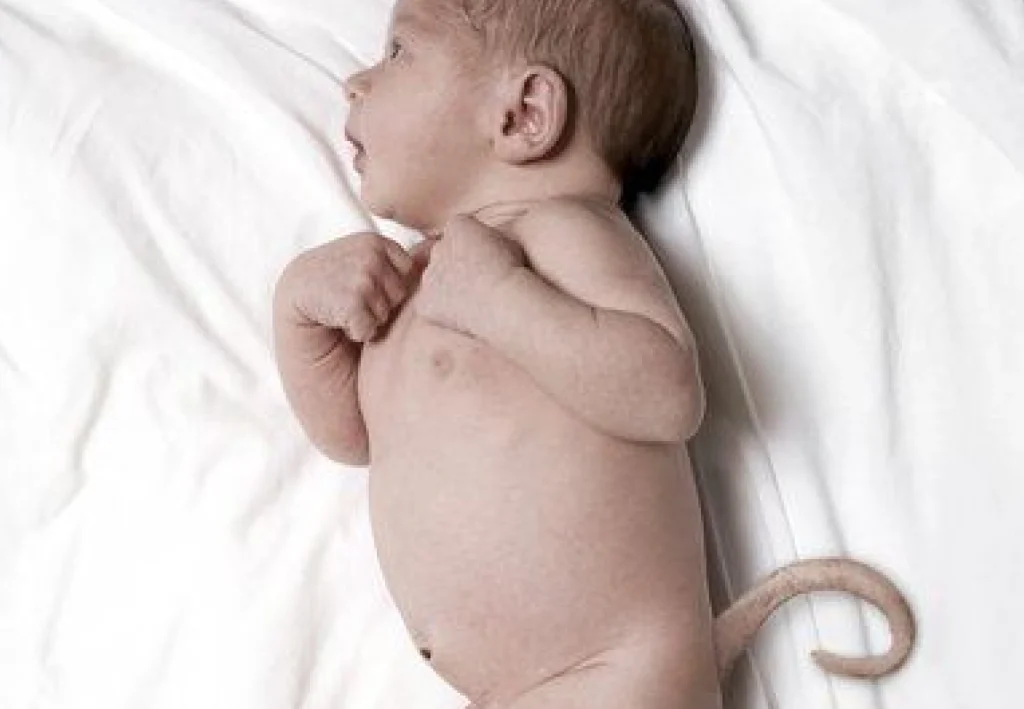
It sounds shocking, but it’s true. Some babies are born with tails. These tail-like structures appear at birth and often surprise parents and doctors alike. The idea can feel strange, even alarming, at first glance.
But here’s the truth. Babies born with a tail are not a myth or a medical mystery. These cases are rare, but they are well documented in modern medicine. Doctors have studied them for decades and understand why they happen.
Most importantly, a tail in newborn babies is usually harmless. It does not mean evolution has gone wrong. The real reason lies in early growth inside the womb and human embryonic development.
What Does It Mean When a Baby Is Born With a “Tail”?
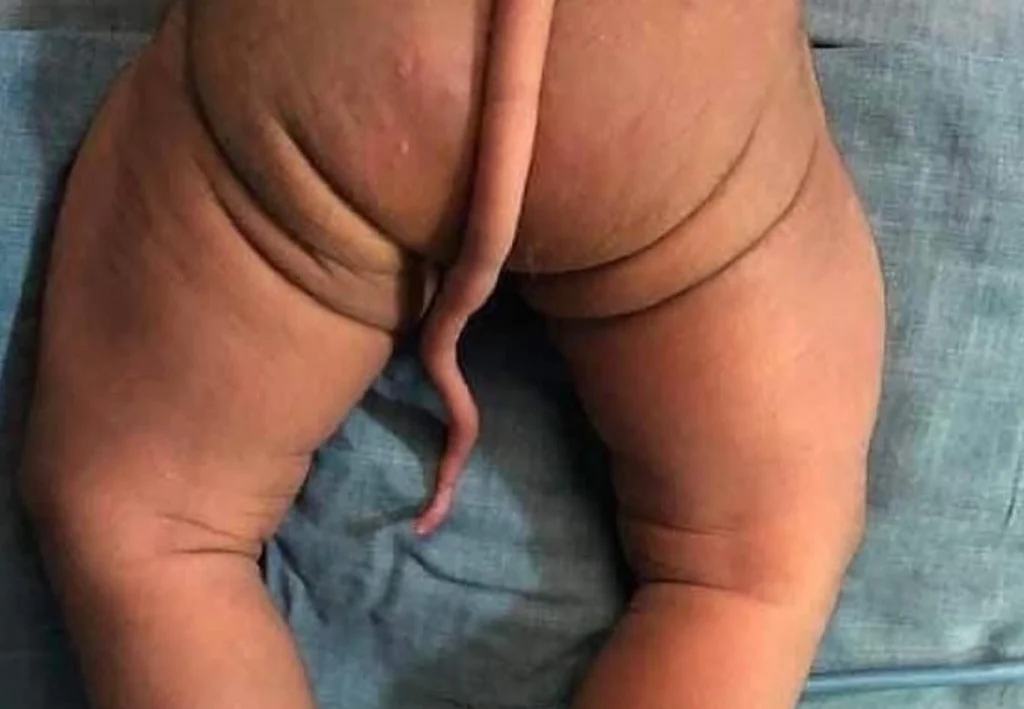
When doctors talk about babies born with tails, they don’t mean an animal tail. Medically, the word “tail” describes a small extension near the lower spine.
There are two main types. One is a true human tail. The other is called a pseudo-tail in babies. They might appear alike at first glance, but their causes are entirely different.
A tail-like structure in newborns is usually small. It can be soft, skin-covered, and located near the tailbone. The term “tail” can be misleading because most cases are not true tails at all.
The Science Behind Human Tails in Babies
During early fetal development, all human embryos form a tail-like structure. This stage is called the embryonic tail in humans. It appears between the fourth and sixth week of pregnancy.
This tail plays a role in early spinal formation. As the baby develops, the tail typically disappears. The body absorbs it as the spine and nerves form.
In rare cases, this process does not finish. When that happens, human babies born with tails may retain a small external remnant. This is part of the normal embryology of the human spine, not a flaw.
True Tails vs Pseudo-Tails: What’s the Difference?
Doctors separate these cases carefully. The difference matters for diagnosis and treatment.
- True human tail: Made of soft tissue. No bones. No spinal connection. Extremely rare.
- Pseudo tail in babies: Caused by fat, cartilage, or spinal issues. More common.
Many cases of congenital tail in babies fall into the pseudo-tail category. Doctors use scans because some pseudo-tails connect to spinal development in infants.
How Common Are Babies Born With Tails?
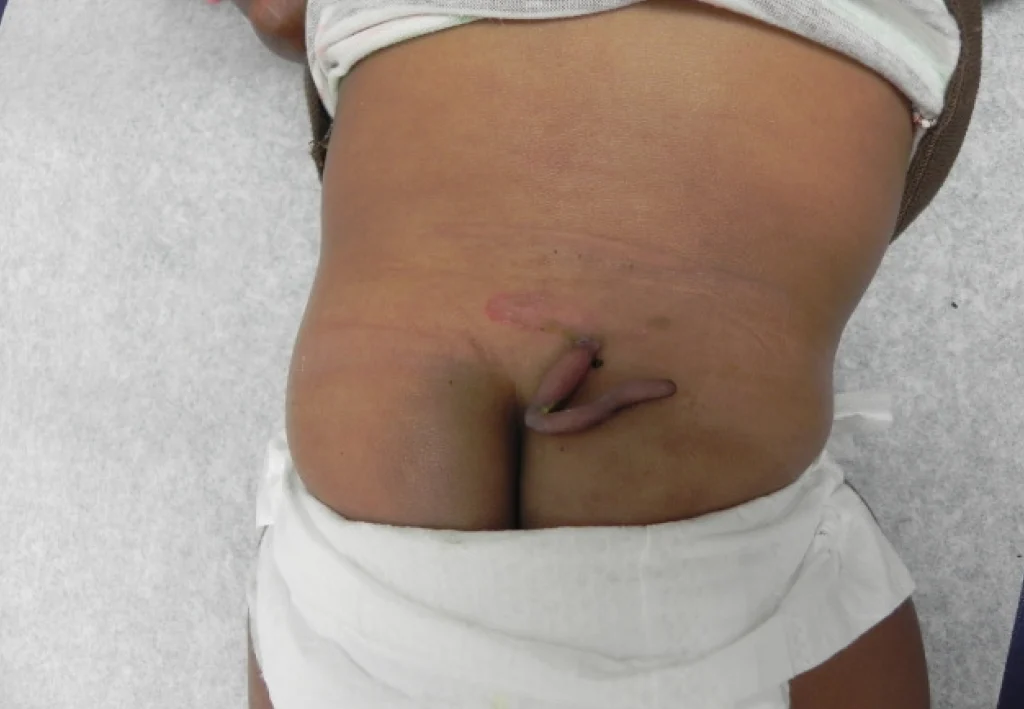
Babies born with a tail are extremely rare. Fewer than 100 confirmed cases have been reported worldwide. That’s why these stories attract attention.
Despite popular belief, this is not proof of evolution reversing. Evolutionary myths about human tails often confuse people. Science shows this condition comes from development timing, not ancestry.
Are These Tails Dangerous or Painful?

In most cases, no. A tail in newborn babies does not cause pain. Many babies show no symptoms at all.
Doctors watch for warning signs, such as weakness or nerve issues. Some cases are linked to neural tube defects or other congenital disabilities and abnormalities. Early checks help rule out risks.
How Are Tail-Like Structures Treated?
Doctors start with a physical exam. Imaging tests, such as ultrasound or MRI, follow. These scans confirm whether the human tail at birth connects to the spine.
Treatment often includes simple surgery. Recovery is usually fast. Most babies grow up healthy with no long-term effects.
What This Tells Us About Human Evolution and Development
These cases teach us a lot. A vestigial tail in humans shows how the body reuses old growth steps. Development builds in layers, then removes what it no longer needs.
This does not mean humans are growing tails again. It highlights how precise and complex growth can be.
Fascinating Facts About Human Development
- Humans briefly form tails and gill-like structures in the womb
- Many unusual features come from incomplete regression
- Growth follows strict biological stages
Each step must happen at the right time.
Frequently Asked Questions (FAQs)
Do babies feel pain from these tails?
No. Most cases cause no pain.
Can these tails move?
True tails do not move. Pseudo-tails may appear flexible.
Are they genetic?
Most cases are random, not inherited.
Is surgery always needed?
Not always. Doctors decide on a case-by-case basis.
Conclusion
So yes, some babies are born with tails. But the real reason is often misunderstood. It comes from early growth patterns and the medical explanation of human tail development.
Human babies born with tails remind us of the intricate nature of the human body. What looks unusual often has a simple scientific reason. Sometimes, the most surprising facts reveal how beautifully human life is built.




Leave a Reply