

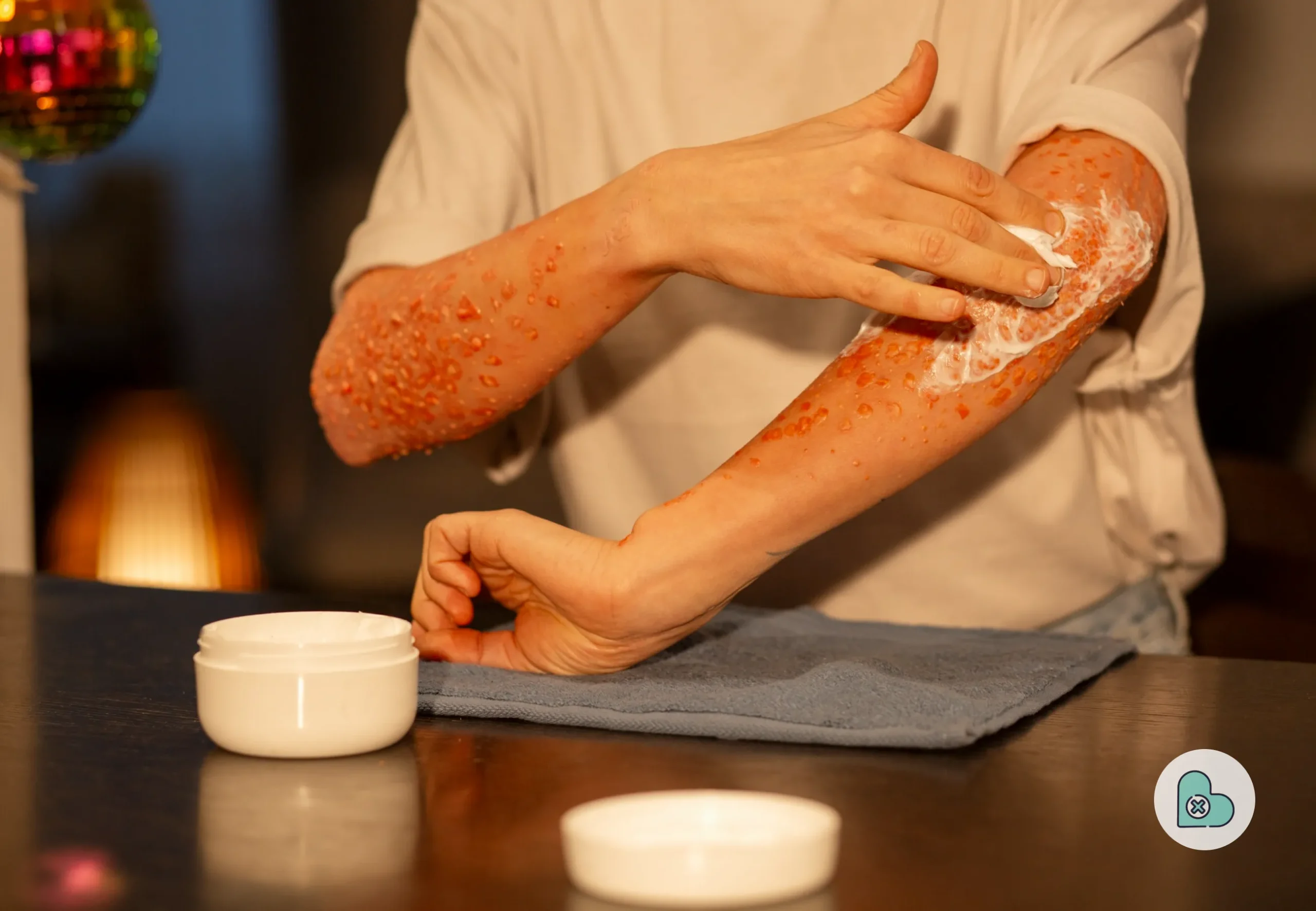
A rash is a skin condition characterized by widespread spots, bumps, or irritation. It’s a broad medical term that covers many appearances. Skin rashes can be dry, moist, bumpy, smooth, cracked, or blistered. They may affect a small area or spread across the body. Some rashes cause pain, itching, or color changes. Others may be subtle.
Rashes have many causes. They can result from skin infections, allergies, medications, or even insect bites. Some are harmless and clear up on their own. Others require medical attention. Understanding types of rashes helps with proper rash care and rash treatment.
Common Causes of Rashes
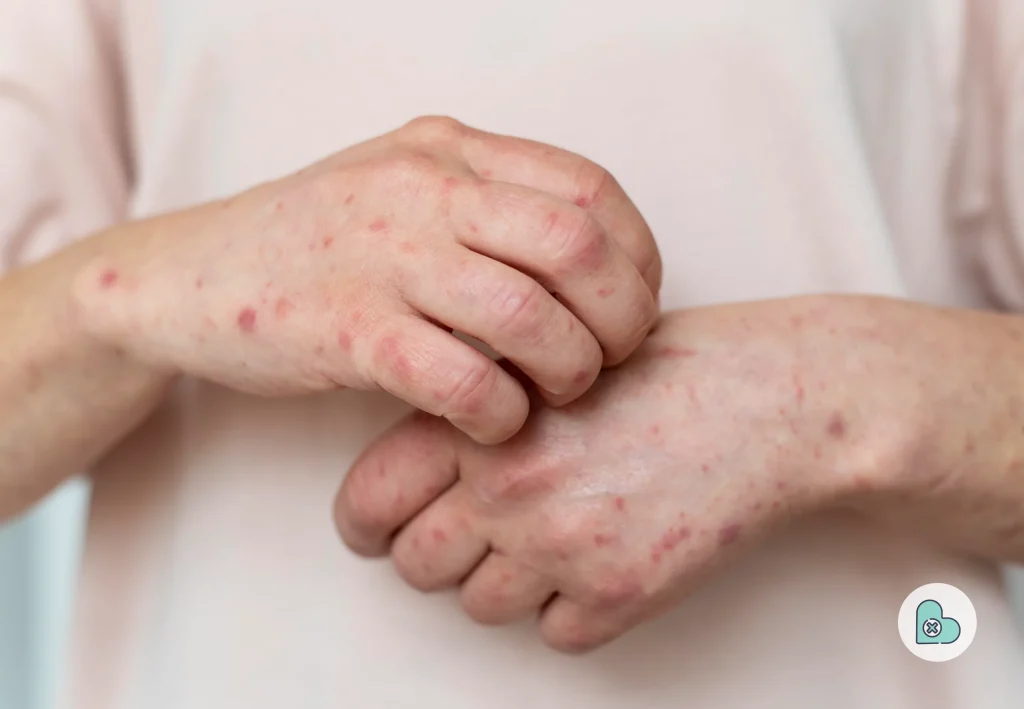
Common Causes of Rashes _ freepik
Rashes appear for many reasons. They may arise from bacterial, viral, fungal, or parasitic infections. Medications, environmental triggers, and underlying health conditions can also cause rashes.
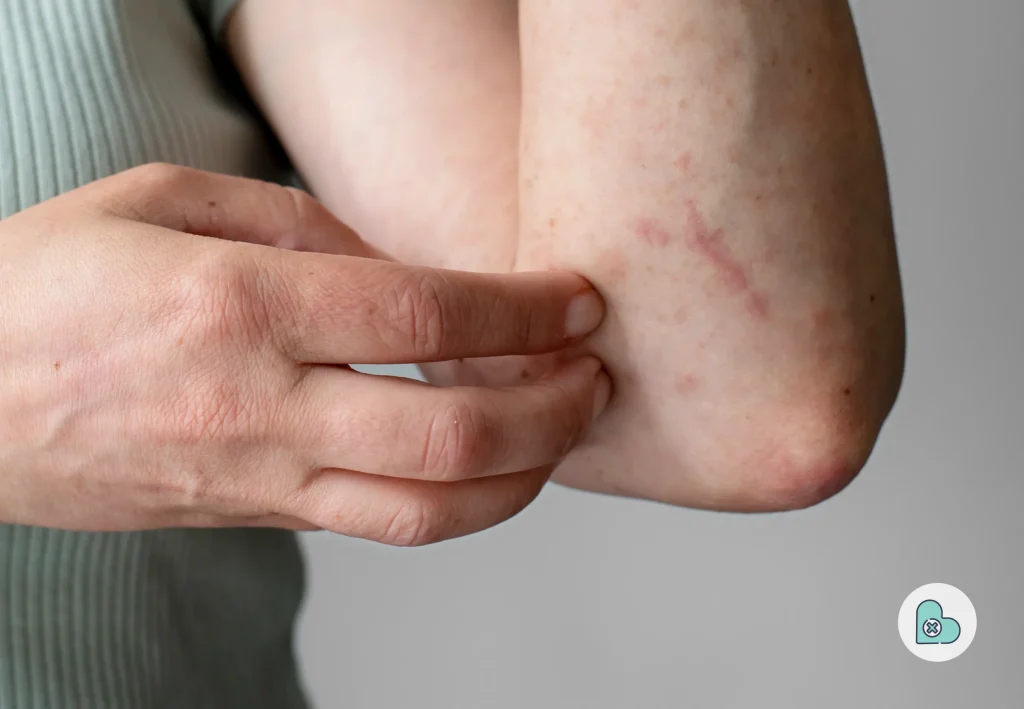
Types of rashes, their symptoms, and how they appear on different skin tones.
_ unsplash
1. Fleabite Rash
A fleabite rash usually appears in clusters on the lower legs and feet.
- The bumps are small and red on lighter skin.
- On darker skin, they appear plum-colored.
- Fleabite rashes develop quickly, often immediately after the bite.
They are itchy but usually harmless. Rash care includes cleaning the area and avoiding scratching.
2. Fifth Disease Rash
A viral illness causes the rash of fifth disease.
- Common symptoms include headache, tiredness, mild fever, sore throat, runny nose, nausea, and diarrhea.
- It causes round, bright red rashes on the cheeks, more visible on lighter skin.
- Arms, legs, and the upper body may show a lacy-patterned rash after a hot shower.
Children are more likely to experience this rash. It usually resolves without treatment.
3. Rosacea
Rosacea is a chronic skin condition that comes and goes.
- Common triggers include spicy food, alcohol, sunlight, stress, and the bacteria Helicobacter pylori.
- Common rosacea symptoms: facial redness, flushing, raised bumps, dry skin, and sensitivity.
- On darker skin tones, bumps can look brown or yellow-brown.
Rash care focuses on avoiding triggers and using gentle skin products.
4. Impetigo
Impetigo often affects children aged 2–5 but can occur at any age.
- Common areas: around the mouth, chin, and nose.
- Blisters are fluid-filled and form a honey-colored crust.
- On darker skin, the rash may appear brown, gray, or purple.
Good hygiene and topical antibiotics help with treatment.
5. Ringworm
Ringworm is a fungal infection that creates round, scaly patches on the skin.
- Patches are pink or red on light skin, gray or brown on darker skin.
- They often have raised borders with clearer skin in the middle.
- Itchy rash is the most common complaint.
Antifungal creams provide effective rash treatment.
6. Contact Dermatitis
Contact dermatitis occurs after touching allergens or irritants.
- The rash has visible borders at the contact site.
- It can be red on light skin, less noticeable on darker skin.
- May develop blisters that ooze or crust over.
- Typically, itchy, scaly, or raw.
Avoiding irritants and applying soothing creams are key to managing a rash.
7. Allergic Eczema
Allergic eczema may look like a burn.
- Often found on hands and forearms.
- Skin is itchy, scaly, or raw, sometimes with blisters.
- Appears reddish on lighter skin, brown, gray, or purple on darker skin.
Moisturizers and topical steroids help relieve symptoms.
8. Hand, Foot, and Mouth Disease
Common in children under five, this viral skin rash appears as:
- Painful, red blisters in the mouth, on the gums, and on the tongue.
- Flat or raised red spots on palms and soles.
- Skin-colored or grayish-brown bumps on darker skin.
- Spots on the buttocks or genital areas.
It usually resolves in 7–10 days with rash care and hydration.
9. Diaper Rash
Diaper area rashes are common in infants.
- Skin appears red, wet, or slightly lighter/darker than normal.
- The area may feel warm.
- Frequent diaper changes and barrier creams aid rash treatment.
10. Eczema
Eczema causes dry, rough, flaky, and inflamed skin.
- Affected areas appear red and itchy.
- Hair loss may occur in the rash area.
- Darker skin shows brown or gray patches.
Moisturizers and avoiding triggers reduce symptoms.
11. Psoriasis
Psoriasis creates scaly, silvery patches.
- On light skin, it looks silvery; on dark skin, it has darker patches.
- Common sites: scalp, elbows, knees, lower back.
- Rash may be itchy, but it often has no other symptoms.
Topical treatments and medications help manage flares.
12. Chickenpox
Chickenpox rash appears as red, itchy, fluid-filled blisters in clusters.
- A rash can appear red, blend with your skin tone, or look darker on darker skin.
- Blisters scab over progressively.
- Fever, body aches, a sore throat, and loss of appetite may accompany it.
- Contagious until all blisters dry.
13. Systemic Lupus Erythematosus (SLE Rash)
SLE rash is part of an autoimmune disease.
- Includes butterfly-shaped face rash crossing cheeks and nose.
- Red on lighter skin, red, brown, or darker on darker skin.
- Worsens with sun exposure.
Rash treatment focuses on disease management and sun protection.
14. Shingles
Shingles symptoms include a burning, tingling, or itching rash.
- Fluid-filled blisters often appear in a band on the torso.
- Rash can affect the face; it is a medical emergency if it is near the eyes.
- Accompanied by fever, chills, headache, or fatigue.
- Highly contagious; cover the rash to prevent spread.
15. Cellulitis
Cellulitis is a bacterial or fungal infection.
- Causes red, painful, swollen skin that spreads quickly.
- Skin may feel hot and tender.
- Requires urgent medical attention.
16. Scabies
Mites cause scabies.
- Symptoms appear 2–5 weeks after exposure.
- Rash is extremely itchy, with small bumps.
- Raised white or flesh-toned lines may form.
17. Measles
The measles rash appears after fever, sore throat, and runny nose.
- Red, skin-colored, or darker rash spreads from the face downward in 3–5 days.
- Small white spots with bluish centers can appear in the mouth.
Vaccination prevents severe outbreaks.
18. Tick Bite Rash (Lyme Disease Rash)
Tick bites may be painless.
- Rash may burn, blister, or form a circular target shape.
- Lyme disease causes this rash in 70–80% of cases.
- Seek medical attention immediately if accompanied by fever or breathing difficulty.
19. Seborrheic Eczema
Seborrheic eczema creates yellow or white flaky patches.
- Red areas may appear faint on darker skin.
- Skin may be greasy and itchy.
- Hair loss can occur at the site of the rash.
20. Scarlet Fever
Scarlet fever usually follows untreated strep throat.
- Rash feels like sandpaper.
- Bright red tongue and rash over the body (not palms/soles).
- Requires urgent care.
21. Kawasaki Disease
Kawasaki disease affects children under 5.
- Symptoms: red cracked lips, swollen tongue, high fever, red palms/soles, swollen lymph nodes, and bloodshot eyes.
- It can lead to severe heart problems.
- Early rash treatment and medical care are essential.
Home Remedies for Rash
_ unsplash
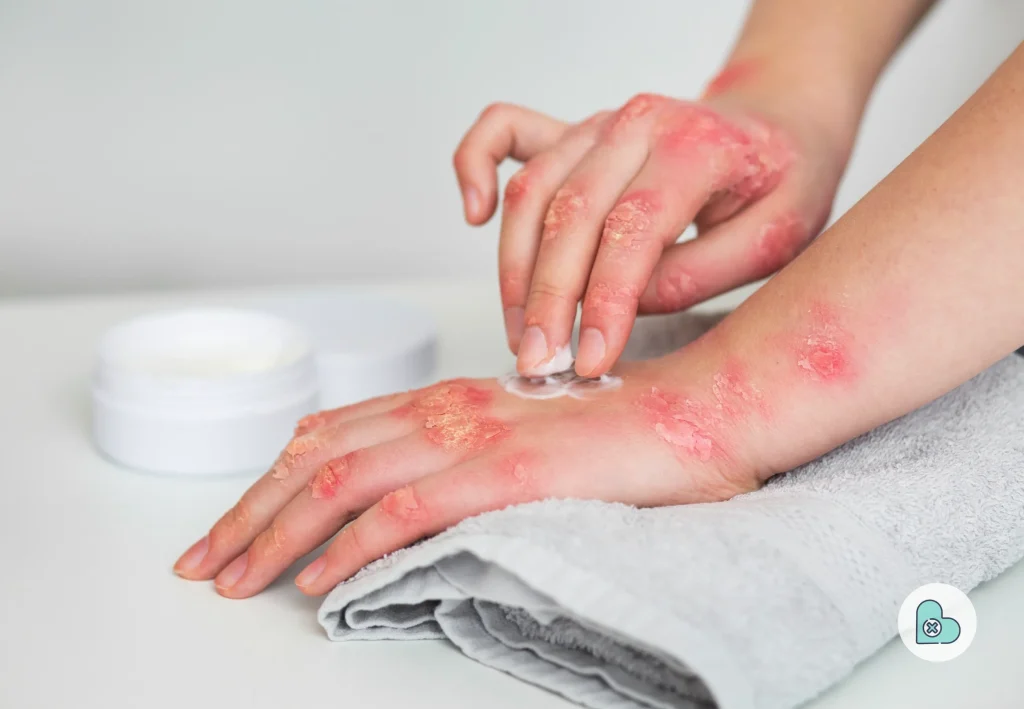
Use these home remedies for rash to ease discomfort and speed recovery:
- Gentle cleansing: Use mild soap, baby soap, or soap for sensitive skin. Avoid scented soaps.
- Warm water wash: Wash in warm water, not hot, to prevent irritation.
- Loose clothing: Wear cotton, loose-fitting clothes to reduce friction and allow skin to breathe.
- Moisturizers and emollients: Ask a doctor or pharmacist about unscented moisturizers for rash.
- Avoid covering the rash: Do not use Band-Aids or tight bandages on the affected area.
- Pat dry: After washing, gently pat the rash dry rather than rubbing.
- Moisturize dry rashes: For eczema home remedies, apply unscented moisturizers to prevent dryness.
- Avoid irritants: Stop using cosmetics, lotions, or new products that may trigger the rash.
- No scratching: Avoid scratching to reduce the risk of infection.
- Topical relief: Use over-the-counter cortisone cream for rash or calamine lotion for rash to ease itching.
- Chronic condition care: For psoriasis-related rashes, managing stress may reduce flare-ups.
- Pain relief: Acetaminophen or ibuprofen can ease discomfort from a rash. Consult a doctor before use.
When to Seek Medical Attention

_ freepik
Most rashes are mild, but some require a doctor. Seek advice if a rash appears with:
- Sore throat or joint pain
- Recent animal or insect bite
- Red, purple, or dark streaks near the rash
- Tender areas near the rash
- Pus-filled or spreading blisters
Emergency care is necessary if you notice:
- Rapidly changing skin discoloration
- Difficulty breathing or throat swelling
- Severe or increasing pain
- High fever, confusion, or dizziness
- Swelling of the face or extremities
- Persistent vomiting or diarrhea
Rash appearance varies by skin tone. On lighter skin, rashes often appear red or pink. On darker skin, they may look purple, gray, or white. Correct diagnosis depends on observing these differences.
Bottom Line on Rash Care
Rashes are areas of irritated or swollen skin. They can feel itchy, painful, dry, or form blisters. Proper rash management involves gentle cleansing, hydration, and avoiding irritants. Monitor symptoms carefully, especially if the rash worsens quickly or spreads.
For rash relief, home remedies like mild soaps, moisturizers, loose clothing, and calamine can be effective. Severe or rapidly progressing rashes need prompt medical attention. Understanding rash symptoms and knowing when to act ensures safe recovery. Regular rash care and rash prevention reduce discomfort and complications.






Leave a Reply